SodaSlim Official Website › Blog › What The Garcinia Trial Found
Garcinia Cambogia: What The JAMA Trial Actually Found
Garcinia is in almost every appetite formula on the market on the strength of a mechanism that works in a test tube. The most direct test of that idea in people was published in JAMA in 1998, ran for twelve weeks at 1,500 mg a day, and found nothing.
- The active in garcinia rind is hydroxycitric acid, and the mechanism behind it is real in a test tube.
- The 1998 randomised trial gave 135 adults 1,500 mg a day for twelve weeks and found no difference from placebo in fat mass.
- The one trial that tested it specifically on appetite found no effect on hunger, fullness or intake.
- A later meta-analysis found a small difference and called its clinical relevance questionable.
- Rare acute liver injury has been reported following garcinia weight-loss supplements.
The trial that tested the idea directly
The 1998 trial is unusually well designed for this category. It enrolled 135 overweight adults, randomised them to 1,500 milligrams of hydroxycitric acid a day or to placebo, ran for twelve weeks, and put everyone on the same high-fibre, low-energy diet so the capsule was the only variable.
Both groups lost weight, because both groups were dieting. The groups did not differ in fat mass, which was the outcome the trial was built to detect.
That is about as clean a negative result as a supplement ingredient gets. The dose was generous, the trial was long enough, the sample was reasonable and the diet was controlled.
| The trial | Design | Result |
|---|---|---|
| Heymsfield 1998, JAMA | 135 overweight adults, 1,500 mg of hydroxycitric acid a day, twelve weeks, placebo-controlled, everyone on the same high-fibre low-energy diet | No difference from placebo in fat mass. Both groups lost weight, because both groups were dieting |
| Mattes and Bormann 2000 | Hydroxycitric acid against appetite variables in people | No effect on hunger, fullness or energy intake |
| Onakpoya 2011 meta-analysis | The randomised trials available at the time, pooled | A small difference in weight, which the authors described as of questionable clinical relevance given study quality |
| Marquez 2012 review | Safety and efficacy of hydroxycitric acid and Garcinia extracts in humans | Collected both sides of the picture |
Every row is a human study. The mechanism claim comes from test-tube work, which is covered further down.
A 2011 meta-analysis of the trials available at the time did find a small difference in weight in favour of the ingredient, and the authors were careful about it: they described the effect as of questionable clinical relevance given the quality of the underlying studies. A meta-analysis is only as good as what it pools.
Where the mechanism claim comes from
Almost every sales page for garcinia describes it as blocking the enzyme the body uses to make fat. That sentence is accurate about a test tube and it is doing a great deal of work it has not earned.
Hydroxycitric acid does inhibit ATP citrate lyase, an enzyme in the pathway that converts excess carbohydrate into fatty acids. What that sentence leaves out is that in people eating an ordinary mixed diet, this pathway is not a major route to stored fat in the first place. Most stored fat arrives as fat.
So the enzyme can be inhibited exactly as described and very little follows from it. That is not a trick. It is the ordinary gap between a mechanism and an outcome, and it is the reason trials exist.
| Where the claim comes from | What it shows | What it does not show |
|---|---|---|
| ATP citrate lyase inhibition in vitro | Hydroxycitric acid inhibits an enzyme in the pathway that converts carbohydrate to fat | That the pathway is a significant route in a person on an ordinary diet |
| Rodent feeding studies | Effects on food intake and fat accumulation in animals | That the same happens in people at a dose a capsule can deliver |
| Serotonin-related appetite proposals | A hypothesised route to reduced appetite | Anything measurable. The one human appetite trial found no effect |
| The 1998 randomised trial | The most direct test the idea has had in people | A positive result. It did not find one |
A mechanism is a reason to run a trial. It is not a substitute for one.
This is the most useful single idea to carry into any supplement label. An ingredient that does something interesting in a cell culture has a reason to be tested, not a reason to be bought. Where a trial has been run, the trial is the answer.
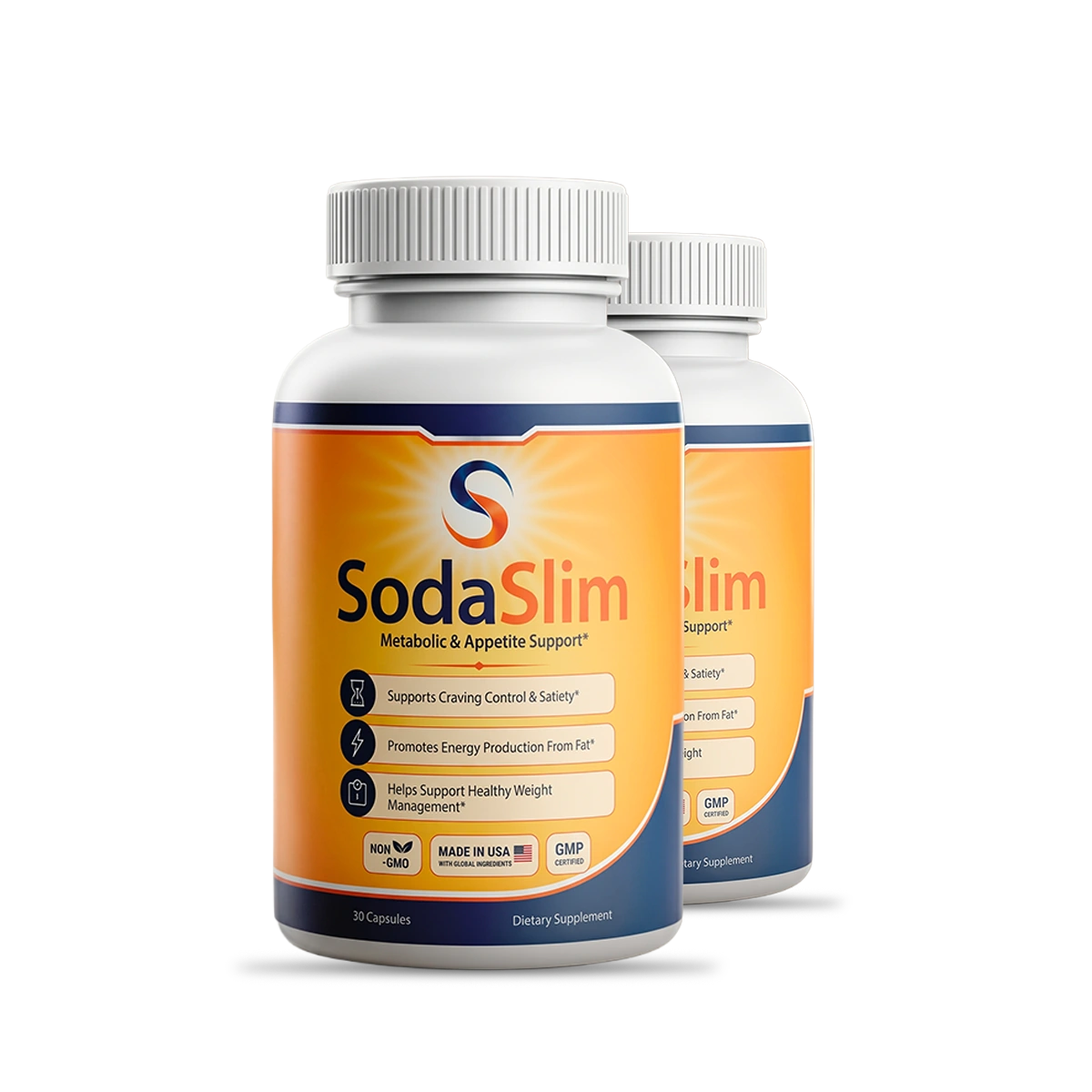
Order SodaSlim on the official website
One capsule each morning, 30 to a bottle, and 60 days from the date of purchase to decide.
Two bottles $158 · six bottles $294 · 60-day money-back guarantee
Order SodaSlim On The Official WebsiteOne capsule a day · 30 per bottle · lot SOD-26/SE-1477
The appetite question, asked separately
Garcinia is usually sold for appetite rather than for the enzyme, so the question was asked directly.
Mattes and Bormann tested hydroxycitric acid against appetitive variables in people: hunger ratings, fullness, and how much food was actually eaten. They found no effect on any of them.
That is worth setting beside the four support lines this kind of bottle carries. Two of them are about craving control and satiety, and the ingredient that half of the formula rests on has been tested for exactly that and came back empty.
Some people taking this kind of capsule do report an easier afternoon. That report is real and it is not the same as a demonstrated effect, and a good page says both things rather than choosing one.
Why the dose in a capsule matters here
The 1998 trial used 1,500 mg of hydroxycitric acid a day. Most multi-ingredient capsules carry a small fraction of that once the garcinia extract's standardisation is taken into account.
That creates an odd situation. The negative result from the trial does not straightforwardly apply to a capsule containing a tenth of the dose, because that is a different exposure that nobody has tested. A supporter of the ingredient could fairly say the trial does not rule out the capsule.
The trouble with that defence is that it cuts the other way with more force. If the dose the trials used produced nothing, a tenth of it producing something would be surprising. And on a label that prints no amount at all, neither argument can be checked.
- Look for hydroxycitric acid, not just garcinia. The extract is standardised to a percentage of it, usually 50 or 60 per cent.
- Do the arithmetic. A 500 mg garcinia extract at 60 per cent is 300 mg of hydroxycitric acid, which is a fifth of the trial dose.
- Treat a missing figure as a missing figure. It is not evidence of a low dose, and it is not evidence of a high one.
- Do not pay a premium for it. Garcinia is cheap, and it is in most of these formulas because it is familiar rather than because it works.
The safety literature
A review of safety and efficacy in humans covers both sides of the ingredient, and the safety side is worth knowing even though the events involved are rare.
A case series and literature review collected reports of acute liver injury following garcinia weight-loss supplementation, and a 2019 case report describes one in detail. Most reports involve multi-ingredient products, which makes attribution difficult, and the mechanism is not established.
Keeping this in proportion matters. Garcinia is taken by very large numbers of people and reported liver events number in the dozens rather than the thousands. The reason to name them is that they are recognisable: yellowing skin or eyes, dark urine, pain under the right ribs, persistent nausea or unexplained tiredness. Somebody who recognises those stops a week earlier than somebody who does not.
Why garcinia is still in almost every formula
Given all of the above, the obvious question is why the ingredient remains so common. There are three reasons and none of them is about evidence.
It is cheap. Garcinia extract costs very little per capsule, which matters when a formula has to carry five names and hit a price point. It is familiar: a buyer scanning a label recognises it, and recognition sells. And it has a story that fits in one sentence, which is the most valuable property an ingredient can have on a sales page.
None of that makes its inclusion dishonest. A formula is allowed to contain an ingredient with a weak evidence base as long as the label does not claim more than the evidence supports. The problem arises where a sales page describes it as blocking the body's fat production, which is a claim about a person rather than about a test tube.
That distinction is the reason this desk declined to carry that sentence. The refusal is recorded with its reason, which is more useful than silently leaving it out.
Garcinia is one of five named actives in SodaSlim and it is the one whose most direct human trial was negative. That is stated on the ingredients page and in the honest label analysis on the home page, and it is the reason the editorial score on this site is not higher than it is.
References
- Heymsfield SB, Allison DB, Vasselli JR, et al. Garcinia cambogia (hydroxycitric acid) as a potential antiobesity agent: a randomized controlled trial. JAMA. 1998;280(18):1596-600. PMID 9820262. https://pubmed.ncbi.nlm.nih.gov/9820262/
- Onakpoya I, Hung SK, Perry R, et al. The Use of Garcinia Extract (Hydroxycitric Acid) as a Weight loss Supplement: A Systematic Review and Meta-Analysis of Randomised Clinical Trials. J Obes. 2011;2011:509038. PMID 21197150. https://pubmed.ncbi.nlm.nih.gov/21197150/
- Mattes RD, Bormann L. Effects of (-)-hydroxycitric acid on appetitive variables. Physiol Behav. 2000;71(1-2):87-94. PMID 11134690. https://pubmed.ncbi.nlm.nih.gov/11134690/
- Marquez F, Babio N, Bullo M, et al. Evaluation of the safety and efficacy of hydroxycitric acid or Garcinia cambogia extracts in humans. Crit Rev Food Sci Nutr. 2012;52(7):585-94. PMID 22530711. https://pubmed.ncbi.nlm.nih.gov/22530711/
- Crescioli G, Lombardi N, Bettiol A, et al. Acute liver injury following Garcinia cambogia weight-loss supplementation: case series and literature review. Intern Emerg Med. 2018;13(6):857-872. PMID 29802521. https://pubmed.ncbi.nlm.nih.gov/29802521/
- Yousaf MN, Chaudhary FS, Hodanazari SM, et al. Hepatotoxicity associated with Garcinia cambogia: A case report. World J Hepatol. 2019;11(11):735-742. PMID 31772720. https://pubmed.ncbi.nlm.nih.gov/31772720/