SodaSlim Official Website › Choosing A Metabolism Supplement
Choosing A Metabolism SupplementChoosing A Metabolism Supplement: Seven Checks, Hardest First
Most of the work of choosing one of these products is done by reading its label, and most of the labels fail the first check. Seven tests follow, ordered so that a failure early stops you spending time on the rest. This desk's own product fails the first one, and that is stated where it falls.
A method rather than a recommendation, and one that will sometimes tell you to buy nothing.
Check one: are the amounts printed?
This is the check that decides most of the others. A label that names its ingredients without saying how much of each is present has given you a list you cannot evaluate.
| What you see | What it means |
|---|---|
| A full panel with a milligram against every active | Pass. You can compare each one against the trial that studied it |
| A proprietary blend with one total for several ingredients | Partial. You know the total and not the split, and the cheapest ingredient is usually most of it |
| Names with no amounts at all | Fail. Nothing can be checked against anything |
| A panel with standardisation figures for the extracts | The best case. This is what a good label in this category prints |
Apply this one first. A failure here makes checks three to seven unanswerable.
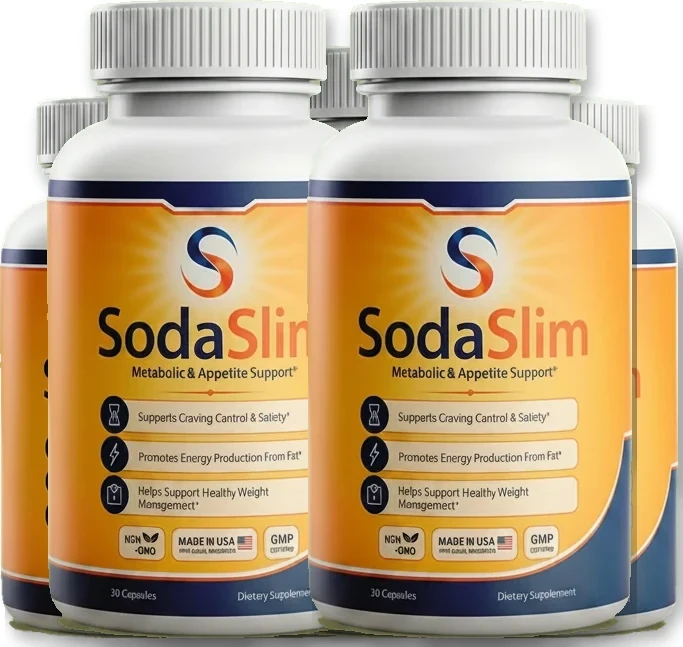
SodaSlim names five actives and carries no Supplement Facts panel in any artwork this desk holds. It fails check one. That is stated here, on the home page, and on the ingredients page, and a reader of this guide could know nothing else about it and still be better informed than most buyers.
Check two: how much caffeine, from how many sources?
Almost everything in this category is a stimulant product with botanicals attached. The caffeine figure is what decides whether it fits your day.
Count the sources, not just the named row. Green tea extract, green coffee extract, guarana and yerba mate all carry caffeine, and a label naming caffeine anhydrous plus two of those is delivering more than its caffeine row suggests.
The usual adult ceiling is 400 mg a day from all sources. A filter coffee is around 95 mg. Work out your own baseline first; the room left over is the budget a capsule has to fit into.
A 2025 crossover trial found both the dose and the time of day affected sleep independently, which is why a morning instruction on a label is worth following rather than treating as a suggestion.
Check three: does the dose match the research?
Assuming check one passed, this is where a label earns or loses its credibility. Four reference points cover most of the category.
| Ingredient | The dose its trials used | What a capsule usually carries |
|---|---|---|
| Caffeine | 50 to 200 mg in thermogenesis studies | Often in range. This is the one ingredient commonly dosed properly |
| Green tea catechins | 270 to 1,200 mg a day | Frequently a tenth of the low end once the standardisation is read |
| Chlorogenic acid | 180 to 400 mg of extract a day | Variable, and often unreadable without a standardisation figure |
| Hydroxycitric acid | 1,500 mg a day in the JAMA trial | Almost always far less, which makes the trial's negative result inapplicable |
An underdosed ingredient is not a smaller version of the trial. It is a different experiment nobody has run.
The practical rule is that an ingredient at a fraction of its trial dose is there for the label rather than for the reader. That is not fraud and it is not useless marketing either; it is simply a fact worth knowing before paying for it.
Check four: what does the claim actually say?
Structure and function claims are the only kind a supplement may print, and they are written in a vocabulary worth learning.
- Supports, promotes, helps maintain. Legitimate wording. It describes a direction and stops short of an outcome.
- Burns, blocks, melts, eliminates. Outcome language. A label using it is either careless or making a claim it cannot support.
- Clinically studied ingredients. Check which ingredient and at what dose. The phrase is true of caffeine in any product containing it.
- Doctor formulated. Almost always names nobody. Ask which doctor and what their involvement was.
- A sales page saying more than the bottle. The commonest pattern in this category. The bottle is the regulated surface and it is the one to read.
The last point is worth dwelling on. A label is written by somebody who knows the rules; a sales page is written by a copywriter. Where they disagree, the label is the accurate one and the gap between them tells you how the company thinks.
Checks five, six and seven
Five: what does the guarantee actually cover?
Length, whether it counts from purchase or from delivery, whether opened bottles are included, and who pays the return postage. A guarantee covering only unopened stock is a return policy wearing a better name. Sixty days from purchase with opened bottles included is a strong term.
Six: is there a small pack?
A ladder that starts at six bottles is a ladder designed to prevent you finding out. The ideal is a smallest pack that covers the guarantee window, so the supply and the decision run out together.
Seven: who answers the phone?
A published number, a published returns address and a desk that can see an order. Ring it before buying and ask a specific question about the formula. What comes back tells you more about the seller than any badge on the bottle.
An analysis of FDA warnings is the reason check seven is on this list at all. Weight-loss products are among the categories most often found adulterated with unapproved pharmaceutical ingredients, and a traceable seller with a real returns address is the practical protection against buying one.
What to do when a product fails a check
It depends which one, and being specific is more useful than a blanket rejection.
| Failed check | How serious | What to do |
|---|---|---|
| One: no amounts printed | Serious | Ring the seller and ask. If the figure cannot be supplied, buy something that prints it |
| Two: caffeine from several sources, no total | Serious on a stimulant | Treat the capsule as one strong coffee and remove one from the day |
| Three: underdosed against the research | Moderate | Decide whether the rest of the formula justifies the price |
| Four: outcome language on the label | Serious | A label breaking the rules is a company to be cautious of generally |
| Five: a weak guarantee | Moderate | It raises the cost of being wrong. Buy the smallest pack |
| Six: no small pack | Moderate | The same. It is the seller transferring risk to you |
| Seven: nobody answers | Serious | Buy nothing. This is the one failure with no workaround |
Only checks one, four and seven are on their own reasons to walk away.
And one more option that belongs on any honest version of this page: buy nothing at all. The evidence behind behavioural programmes is stronger than the evidence behind every ingredient in this category, and the money a six-bottle order costs would buy several months of something with better support behind it.
Who publishes this SodaSlim website?
- Nawrot P, Jordan S, Eastwood J, et al. Effects of caffeine on human health. Food Addit Contam. 2003;20(1):1-30. PMID 12519715. https://pubmed.ncbi.nlm.nih.gov/12519715/
- Gardiner CL, Weakley J, Burke LM, et al. Dose and timing effects of caffeine on subsequent sleep: a randomized clinical crossover trial. Sleep. 2025;48(4). PMID 39377163. https://pubmed.ncbi.nlm.nih.gov/39377163/
- Jurgens TM, Whelan AM, Killian L, et al. Green tea for weight loss and weight maintenance in overweight or obese adults. Cochrane Database Syst Rev. 2012;12(12):CD008650. PMID 23235664. https://pubmed.ncbi.nlm.nih.gov/23235664/
- Oketch-Rabah HA, Roe AL, Rider CV, et al. United States Pharmacopeia (USP) comprehensive review of the hepatotoxicity of green tea extracts. Toxicol Rep. 2020;7:386-402. PMID 32140423. https://pubmed.ncbi.nlm.nih.gov/32140423/
- Kanchanasurakit S, Saokaew S, Phisalprapa P, et al. Chlorogenic acid in green bean coffee on body weight: a systematic review and meta-analysis of randomized controlled trials. Syst Rev. 2023;12(1):163. PMID 37710316. https://pubmed.ncbi.nlm.nih.gov/37710316/
- Heymsfield SB, Allison DB, Vasselli JR, et al. Garcinia cambogia (hydroxycitric acid) as a potential antiobesity agent: a randomized controlled trial. JAMA. 1998;280(18):1596-600. PMID 9820262. https://pubmed.ncbi.nlm.nih.gov/9820262/
- Tucker J, Fischer T, Upjohn L, et al. Unapproved Pharmaceutical Ingredients Included in Dietary Supplements Associated With US Food and Drug Administration Warnings. JAMA Netw Open. 2018;1(6):e183337. PMID 30646238. https://pubmed.ncbi.nlm.nih.gov/30646238/
- US Preventive Services Task Force, Curry SJ, Krist AH, et al. Behavioral Weight Loss Interventions to Prevent Obesity-Related Morbidity and Mortality in Adults: US Preventive Services Task Force Recommendation Statement. JAMA. 2018;320(11):1163-1171. PMID 30326502. https://pubmed.ncbi.nlm.nih.gov/30326502/
- Batsis JA, Apolzan JW, Bagley PJ, et al. A Systematic Review of Dietary Supplements and Alternative Therapies for Weight Loss. Obesity (Silver Spring). 2021;29(7):1102-1113. PMID 34159755. https://pubmed.ncbi.nlm.nih.gov/34159755/
- Using Dietary Supplements Wisely. National Center for Complementary and Integrative Health, National Institutes of Health. https://www.nccih.nih.gov/health/using-dietary-supplements-wisely
- Dietary Supplements: What You Need to Know. Office of Dietary Supplements, National Institutes of Health. https://ods.od.nih.gov/factsheets/WYNTK-Consumer/