SodaSlim Official Website › Blog › Green Tea Extract And Your Liver
Green Tea Extract And Your Liver: What The Reviews Actually Say
Green tea is one of the most-drunk beverages on earth and nobody worries about it. Concentrated green tea extract in a capsule is a different exposure, and the United States Pharmacopeia has reviewed the safety literature on it twice. This is what they found, in proportion.
- Brewed green tea is not implicated. The safety signal is about concentrated extracts.
- The United States Pharmacopeia reviewed the hepatotoxicity literature in 2008 and again in 2020.
- Reported liver events are rare, and they cluster around higher catechin doses taken on an empty stomach.
- Taking an extract with food is the simplest thing that reduces the exposure.
- Without a catechin figure on a label, none of this can be applied precisely, which is an argument for asking the seller.
Tea and extract are different exposures
The central idea on this page is a distinction that a great deal of marketing blurs deliberately.
A cup of brewed green tea delivers a modest amount of catechins in a large volume of fluid, taken slowly, usually several hours apart. A standardised extract capsule delivers a concentrated dose in one swallow, and the concentration factor can be substantial.
Those are not the same exposure, and a sentence like "green tea has been drunk safely for centuries" is true of the first and says nothing about the second. It is the commonest piece of misdirection in this category.
| Form | Typical catechin exposure | Where the safety signal sits |
|---|---|---|
| Brewed green tea, a few cups a day | Modest, spread across the day, taken with fluid | No signal. Tea has been drunk at this level for centuries |
| A green tea drink or concentrate | Higher, and variable | Little signal, though the exposure is less well characterised |
| A standardised extract capsule | Concentrated into one dose | This is where the reported cases cluster |
| A high-dose extract taken fasted | Concentrated, and absorbed faster | The specific setting the USP review identified |
The distinction between tea and extract is the single most important idea on this page.
What the two USP reviews found
The 2008 review was a systematic review of green tea extract safety by the United States Pharmacopeia, which sets quality standards for medicines and supplements. It collected the adverse event reports available at that point.
The 2020 review went considerably further, covering the hepatotoxicity literature comprehensively. Its conclusion is the one worth quoting: the signal is associated with concentrated extracts rather than with brewed tea, and the risk appears related to the catechin dose and to whether it is taken on an empty stomach.
Two things follow from that. The first is that food matters, which is unusual for a safety finding because it gives a reader something concrete to do. The second is that a catechin figure on a label is a safety-relevant number, not just an efficacy one.
- The events are idiosyncratic. They do not follow a simple dose curve in the way a toxic effect would, which is part of why the mechanism is unsettled.
- They are rare. Set against the number of doses taken worldwide, reported cases are a very small number.
- They are recognisable. Yellowing of the skin or eyes, dark urine, pale stools, pain under the right ribs, persistent nausea, unexplained tiredness.
- They resolve on stopping, usually. Which is why recognising them early matters more than anything else on this page.
Stop the supplement, then arrange to be seen. Take the bottle with you: the ingredient list is the part that is useful to somebody assessing you. This applies to any concentrated botanical extract, not only to green tea.
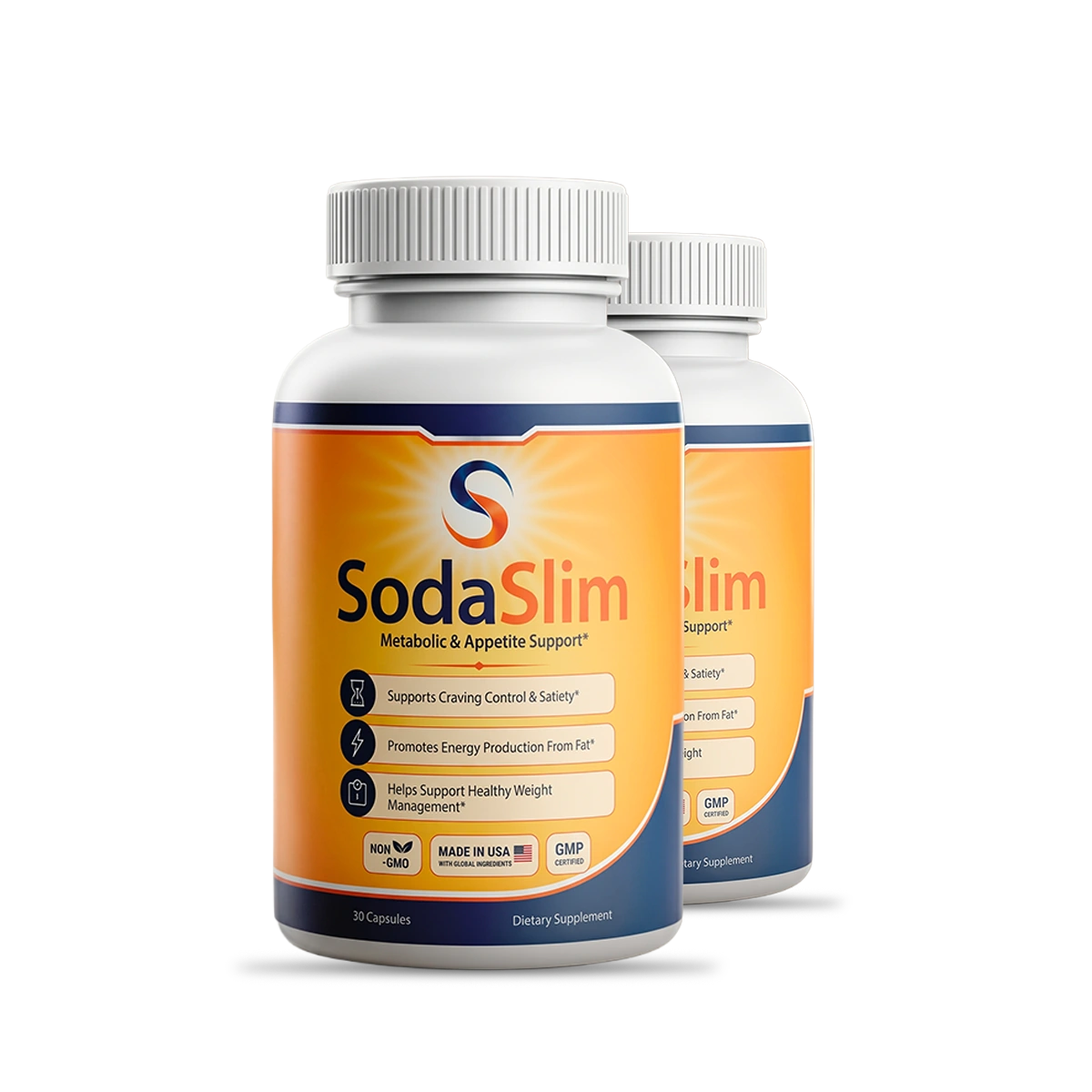
Order SodaSlim on the official website
One capsule each morning, 30 to a bottle, and 60 days from the date of purchase to decide.
Two bottles $158 · six bottles $294 · 60-day money-back guarantee
Order SodaSlim On The Official WebsiteOne capsule a day · 30 per bottle · lot SOD-26/SE-1477
Keeping the risk in proportion
It would be easy to read the section above and conclude that green tea extract is dangerous. That is not what the literature says and it is not what this page is for.
Concentrated green tea extract is taken by many millions of people. The reported liver events number in the hundreds across decades of surveillance, and a substantial proportion of them involve multi-ingredient products where attribution is genuinely uncertain.
The honest framing is that this is a rare idiosyncratic reaction with a recognisable presentation and a simple risk-reduction step. That is a very different thing from a hazard, and treating it as one would be as unhelpful as ignoring it.
Why the missing catechin figure matters here
The reviews describe a risk that rises with catechin dose. A label printing its catechin content lets a reader place their product somewhere on that scale. A label that does not leaves them unable to.
That is why the question this desk suggests asking the order desk has two parts rather than one. The caffeine figure decides how the capsule fits your day. The catechin figure decides where it sits against the literature on this page. Both are one-line answers for a seller who holds a panel.
And does it work?
A safety page that never mentions efficacy is only half a page, so here is the other half.
A 2009 meta-analysis found that catechin and caffeine mixtures produced a small reduction in weight and helped maintain it afterwards. The Cochrane review pooled fourteen trials of green tea preparations and concluded that the average change was small and not clinically important, with wide variation between studies. A 2024 review asked the narrower question of whether catechins add anything alongside exercise training.
Set beside each other, those tell a consistent story: something is happening, it is small, and the studies disagree about how small. That is a reasonable thing to include in a formula and a poor thing to build a promise on.
| Review | What it pooled | What it concluded |
|---|---|---|
| Hursel 2009 | Trials of catechin and caffeine mixtures | A small reduction in weight, and some help maintaining it |
| Cochrane 2012 | Fourteen trials of green tea preparations | The average change was small and not clinically important, with wide variation |
| Gholami 2024 | Trials of catechins alongside exercise training | Asked whether catechins add anything on top of training |
| USP 2008 | Safety reports available at the time | A systematic review of green tea extract safety |
| USP 2020 | The hepatotoxicity literature in full | The signal sits with concentrated extracts rather than with brewed tea |
Two of these are about whether it works and three are about whether it is safe. Both questions have the same answer: it depends on the dose and the form.
What to do about it in practice
- Take it with food. This is the whole of the practical advice from the safety literature and it costs nothing.
- Take it in the morning. Green tea extract carries caffeine, and that is a separate reason not to take it late.
- Do not stack two extracts. A green tea capsule alongside a multi-ingredient product that also contains one doubles an exposure nobody is counting.
- Ask for the catechin figure. It is the number that places your product against everything on this page.
- Know the signs. Four of them, listed above, and they are the reason this page is written at all.
Who has more reason to care than most
Three groups should treat the guidance on this page as a little firmer than general advice, and none of them is unusual.
Anyone with existing liver disease, or taking a medicine known to stress the liver, has less margin for a rare idiosyncratic reaction and should raise a concentrated botanical extract with whoever manages that condition before starting one. Anyone already taking a separate green tea extract product is doubling an exposure that nobody is counting, and stacking two of them is the single most avoidable version of this risk. And anyone who routinely skips breakfast is, by default, taking their capsule in the setting the 2020 review specifically identified.
The last of those is the easiest to fix and the one most people are in without noticing. A morning capsule taken with coffee and nothing else is a fasted dose, whatever it feels like.
A fourth group is worth naming for a different reason: people who take several supplements at once. Attribution is the problem there rather than dose. If something goes wrong on a regime of five bottles, working out which one caused it is nearly impossible, and the honest answer is usually to stop all of them and reintroduce one at a time. That is tedious, and it is the only method that produces an answer.
None of this is a reason to avoid an extract that the same reviews describe as producing small and inconsistent benefits. It is a reason to take it with food, to count how many sources of it are in the cupboard, and to know what the four signs look like.
SodaSlim names green tea extract and prints no catechin figure, and its label instructs a morning capsule without saying whether to take it with food. This desk's how to use page adds the food instruction for the reasons on this page, and the side effects page lists the signs to watch for.
References
- Oketch-Rabah HA, Roe AL, Rider CV, et al. United States Pharmacopeia (USP) comprehensive review of the hepatotoxicity of green tea extracts. Toxicol Rep. 2020;7:386-402. PMID 32140423. https://pubmed.ncbi.nlm.nih.gov/32140423/
- Sarma DN, Barrett ML, Chavez ML, et al. Safety of green tea extracts: a systematic review by the US Pharmacopeia. Drug Saf. 2008;31(6):469-84. PMID 18484782. https://pubmed.ncbi.nlm.nih.gov/18484782/
- Jurgens TM, Whelan AM, Killian L, et al. Green tea for weight loss and weight maintenance in overweight or obese adults. Cochrane Database Syst Rev. 2012;12(12):CD008650. PMID 23235664. https://pubmed.ncbi.nlm.nih.gov/23235664/
- Hursel R, Viechtbauer W, Westerterp-Plantenga MS. The effects of green tea on weight loss and weight maintenance: a meta-analysis. Int J Obes (Lond). 2009;33(9):956-61. PMID 19597519. https://pubmed.ncbi.nlm.nih.gov/19597519/
- Gholami F, Antonio J, Iranpour M, et al. Does green tea catechin enhance weight-loss effect of exercise training in overweight and obese individuals? a systematic review and meta-analysis of randomized trials. J Int Soc Sports Nutr. 2024;21(1):2411029. PMID 39350601. https://pubmed.ncbi.nlm.nih.gov/39350601/