SodaSlim Official Website › Blog › The Retracted Green Coffee Study
The Study Behind Green Coffee Extract Was Withdrawn In 2014
One crossover trial in sixteen adults, published in 2012 and promoted on daytime television, built this entire ingredient category. The journal that published it issued a retraction notice two years later. That changes how every green coffee label on the shelf should be read, including this one.
- The 2012 crossover trial that built this whole shelf was withdrawn by its journal in 2014.
- The sponsors could not assure the validity of the data underlying it.
- The Federal Trade Commission later settled with the company that funded the work over claims built on it.
- The usable evidence is a 2023 systematic review of twelve trials, which found a small average change in body weight at low certainty.
- Green coffee extract is not a scandal ingredient. It is an ordinary ingredient with a famous study that no longer counts.
What happened to the 2012 study
The original paper was a crossover study in sixteen overweight adults, testing two doses of green coffee bean extract against placebo. It reported weight changes large enough that, if real, they would have made the extract one of the most effective non-prescription products ever tested.
It was promoted hard and it built a market. Inside a year the extract was on every shelf in the category, and most labels leaned on that finding whether they cited the paper or not.
In 2014 the journal published a retraction notice. The sponsors of the study could not assure the validity of the data underlying it. A retraction is the strongest statement a journal can make about a paper: not that it was wrong, but that it should not be relied on at all.
| When | What happened |
|---|---|
| 2012 | A crossover study of green coffee bean extract in sixteen overweight adults is published in Diabetes, Metabolic Syndrome and Obesity, reporting large weight changes |
| 2012 | American daytime television picks it up and green coffee extract becomes a shelf of its own |
| 2014 | The journal publishes a retraction notice. The sponsors could not assure the validity of the underlying data |
| 2015 | The Federal Trade Commission settles with the company that funded it over claims built on that data |
| 2023 | A systematic review of twelve randomised trials finds a small average change in body weight, graded at low certainty |
Both PubMed records, the original and the retraction notice, are linked in the references at the foot of this post.
Why a retraction matters more than a weak result
There is an important difference between a study that found little and a study that was withdrawn, and it is worth being clear about it.
A study finding a small effect still contributes. It can be pooled with others, weighted by its size and quality, and argued about. A retracted study contributes nothing. It is removed from the evidence base entirely, and any conclusion that rested on it has to be rebuilt from what is left.
The problem for a reader is that retractions travel far less widely than the findings they withdraw. The television segment that made this study famous reached millions of people. The retraction notice is a single page in a journal.
- A retracted study cannot be cited as evidence. Not with a caveat, not as a starting point, not as one data point among several.
- Marketing built on it does not automatically disappear. Copy written in 2013 is still in circulation.
- The ingredient is not thereby disproved. Other trials exist and some of them are reasonable.
- The effect size expectation has to reset. The honest number is much smaller than the one that made the ingredient famous.
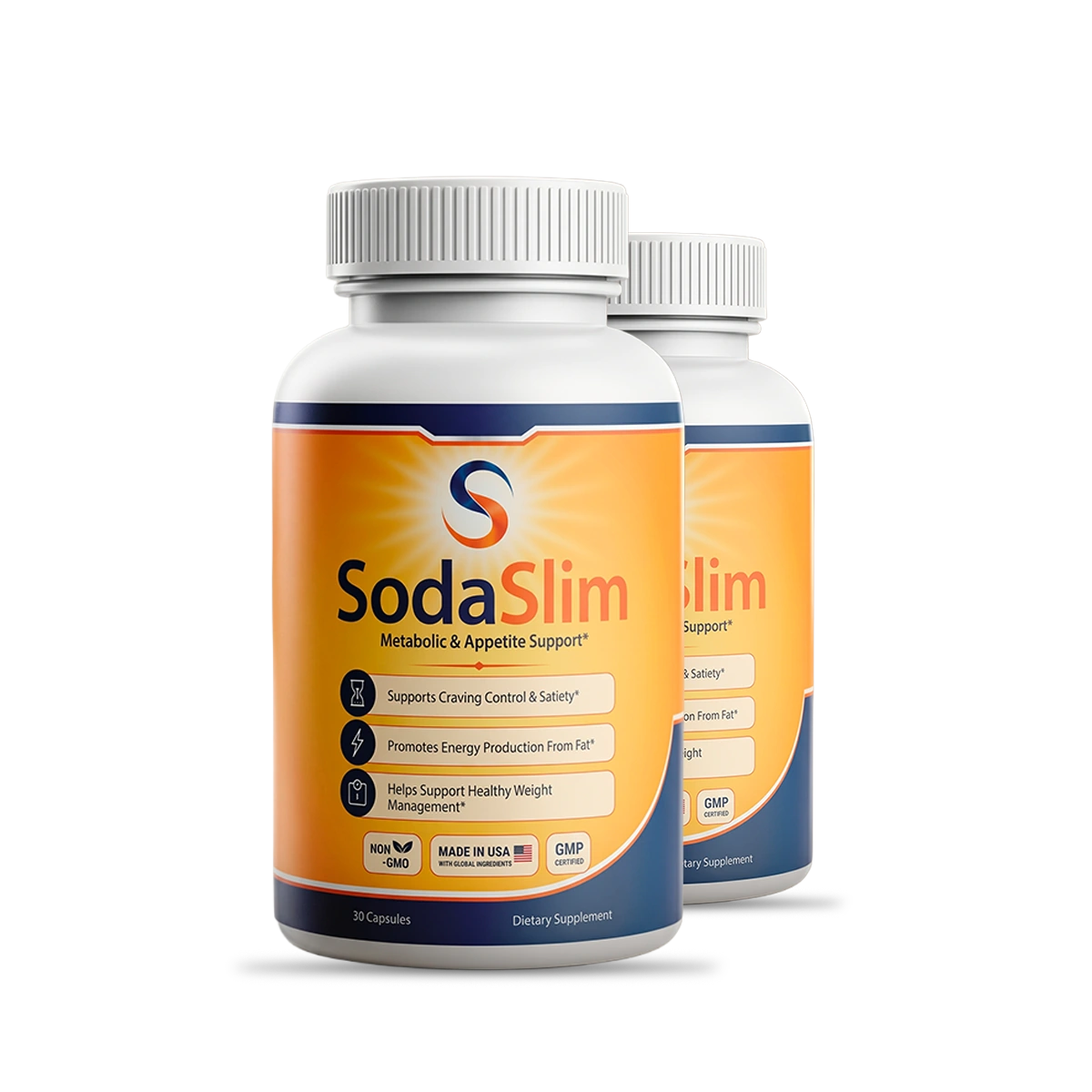
Order SodaSlim on the official website
One capsule each morning, 30 to a bottle, and 60 days from the date of purchase to decide.
Two bottles $158 · six bottles $294 · 60-day money-back guarantee
Order SodaSlim On The Official WebsiteOne capsule a day · 30 per bottle · lot SOD-26/SE-1477
What replaced it
A 2023 systematic review pooled twelve randomised controlled trials of chlorogenic acid from green coffee and reported a small average reduction in body weight, graded at low certainty. Low certainty means the authors would not be surprised if further trials changed the conclusion.
An earlier meta-analysis reached a similar place and was explicit about the quality problems in the studies available to it.
Two individual trials are worth naming because they measured more than weight. An eight-week trial in people with metabolic syndrome looked at anthropometric indices, glycaemic control, blood pressure, lipid profile, insulin resistance and appetite together. A 2021 study in healthy overweight adults reported a change in the ratio of lean mass to fat mass.
| Study | What it tested | What it found |
|---|---|---|
| The 2012 crossover | Green coffee extract at two doses in sixteen adults | Retracted in 2014. Not usable as evidence for anything |
| The 2011 meta-analysis | The trials available at the time | A modest effect, with the authors calling the quality of the studies into question |
| The 2018 eight-week trial | Green coffee extract in metabolic syndrome | Measured anthropometry, glycaemic control, blood pressure, lipids and appetite together |
| The 2021 trial | Green coffee extract in healthy overweight adults | Reported a shift in the ratio of lean mass to fat mass |
| The 2023 systematic review | Twelve randomised trials pooled | A small average change in body weight, at low certainty |
The last row is the one to carry away. The first is the one most often quoted.
What low certainty actually means
Certainty grading is about how much confidence to place in an estimate, not about whether an effect exists. A low grade usually reflects small studies, inconsistent results, or methods that leave room for bias.
For a buyer the practical translation is this: the average effect reported is small, and the true effect could reasonably be smaller still or absent. It is not a reason to avoid the ingredient. It is a reason not to build a purchase around it.
The mechanism, separately from the marketing
Chlorogenic acid is destroyed by roasting, which is why green coffee extract is made from unroasted beans. The proposal is that it slows how quickly carbohydrate is absorbed after a meal and affects how the liver handles glucose afterwards.
That is a plausible mechanism and it is worth noting what the trials did not do: none of the studies pooled in the 2023 review measured carbohydrate absorption directly. They measured weight and body composition, which is the outcome that matters but not the same as confirming the route.
The seller of this product describes the extract as a glucose moderator that stops the body storing fat. That goes well past what the evidence supports, and it is one of the claims this desk declined to carry. The refusals are listed on the disclaimer page with the reason for each.
How to read a green coffee label now
Four things are worth checking on any product in this category, and they apply whether or not the seller has ever heard of the retraction.
- Look for a chlorogenic acid percentage, not just an extract weight. Extracts run from 10 to 50 per cent chlorogenic acid, so a milligram of extract without a percentage is an unreadable number.
- Check the dose against the trials. The randomised studies ran roughly 180 to 400 mg of extract a day.
- Remember it carries caffeine. Green coffee is still coffee, and on a label that also names caffeine anhydrous the totals add up.
- Be suspicious of a large promised effect. The honest figure from the current evidence is small. A page promising more is quoting something that no longer counts.
What a retraction does not mean
It is worth being careful here, because the opposite error is just as easy to make.
A retraction says the paper should not be relied on. It does not say the ingredient is fraudulent, it does not say everyone who sells it is dishonest, and it does not transfer to the other trials of the same compound. Green coffee extract remains an ordinary botanical extract with a modest and uncertain evidence base, which describes a great deal of this category.
What it does mean is that any effect size a reader has absorbed from the coverage of that period should be discarded and replaced with the much smaller one the surviving trials report. The gap between the two is the whole reason this post exists.
It also means something about how to read a sales page. A company still quoting figures from a withdrawn study in 2026 is either not reading its own sources or is hoping you are not. Neither is a reason to trust the rest of the page.
There is a broader lesson here that applies well beyond this one ingredient. A single striking study, promoted widely, can create a market that outlives the study by a decade. The correction, when it comes, reaches a tiny fraction of the audience the original reached, and the products stay on the shelf. That is not a conspiracy; it is simply how attention works, and the practical defence is to look for a systematic review rather than for a headline.
SodaSlim names green coffee bean extract and prints no amount for it, and no chlorogenic acid percentage. Checks one and two above cannot be applied, which is the reason the ingredients page sets the trial dose beside the ingredient rather than beside a label figure.
References
- Vinson JA, Burnham BR, Nagendran MV. Randomized, double-blind, placebo-controlled, linear dose, crossover study to evaluate the efficacy and safety of a green coffee bean extract in overweight subjects. Diabetes Metab Syndr Obes. 2012;5:21-7. RETRACTED. PMID 22291473. https://pubmed.ncbi.nlm.nih.gov/22291473/
- Retraction: Randomized, double-blind, placebo-controlled, linear dose, crossover study to evaluate the efficacy and safety of a green coffee bean extract in overweight subjects. Diabetes Metab Syndr Obes. 2014;7:467. PMID 25340633. https://pubmed.ncbi.nlm.nih.gov/25340633/
- Kanchanasurakit S, Saokaew S, Phisalprapa P, et al. Chlorogenic acid in green bean coffee on body weight: a systematic review and meta-analysis of randomized controlled trials. Syst Rev. 2023;12(1):163. PMID 37710316. https://pubmed.ncbi.nlm.nih.gov/37710316/
- Onakpoya I, Terry R, Ernst E. The use of green coffee extract as a weight loss supplement: a systematic review and meta-analysis of randomised clinical trials. Gastroenterol Res Pract. 2011;2011. PMID 20871849. https://pubmed.ncbi.nlm.nih.gov/20871849/
- Roshan H, Nikpayam O, Sedaghat M, et al. Effects of green coffee extract supplementation on anthropometric indices, glycaemic control, blood pressure, lipid profile, insulin resistance and appetite in patients with the metabolic syndrome. Br J Nutr. 2018;119(3):250-258. PMID 29307310. https://pubmed.ncbi.nlm.nih.gov/29307310/
- Sudeep HV, Shyam Prasad K. Supplementation of green coffee bean extract in healthy overweight subjects increases lean mass/fat mass ratio: A randomized, double-blind clinical study. SAGE Open Med. 2021;9:20503121211002590. PMID 33796302. https://pubmed.ncbi.nlm.nih.gov/33796302/